
‘justified, sensible, logical, or acceptable; something that can be conceded to’, also: ‘I consider this argument, reason, emotion,, etc., to be justified’
Initially, the term was used in online discourse (e.g., in chats or on social media) to refer to an argument, reason, response, emotion, decision, or choice deemed justified, logical, or acceptable by the speaker. Over time, it gained popularity among younger people, who now use it in everyday conversation – both online and offline.
The word also started to be used as a reaction to a statement, argument, reason, emotion, or choice, meaning ‘that makes sense’, ‘that is justified’, or ‘I acknowledge this as valid/legimate in this situation, so I agree with it, or at least I can see your point’.
‘Valid’ is sometimes used ironically when a speaker doubts the validity of someone’s explaination but wants to cut the discussion short wirh a phrase like alright or fair enough.
Furthermore, the word often does not imply full agreement with the speaker’s entire statement, but rather the acceptance of a single point or argument as valid.
Examples of use:
1. Spoko, to jest valid point. Dzięki za twój punkt widzenia. “Cool, that’s a valid point. Thanks for your perspective” /https://wykop.pl/wpis/84870933/epstein-o-co-chodzi-ze-jest-taki-mlyn-wokol-tego-t/ (comment)
2. Akurat to jest valid point. “Actually, that’s a valid point” https://www.reddit.com/r/ShitKonfaSays/comments/1s9mv1n/kara_%C5%9Bmierci_twarde_prawo_wi%C4%99zienie_to_nie_wczasy (comment)
3. To jest valid argument ale nadal uważam że pracowniczy powinni mieć zapewnione szkolenie […] “That’s a valid argument, but I still think employees should be provided with training” (a comment) https://www.reddit.com/r/Polska/comments/1e26bif/comment/lczg1s0
4. To jest valid odpowiedź, ale absolutnie nie da się nic z tym zrobić “That’s a valid answer, but absolutely nothing can be done about it.” (a comment) https://www.reddit.com/r/Polska/comments/17mq8h6/comment/k7mkgqv
5. To, że nie krzywdzę innych ludzi swoim istnieniem ma znaczenie. To jest valid. Ty też jesteś  “The fact that I don’t hurt pther people by existing matters. That is valid. You are too ” (a comment) https://www.reddit.com/r/Antyklerykalizm/comments/13xcoze/comment/jmlb869
6. A może ta diagnoza serio nie jest valid, skoro widzę to ja teraz, od gimnazjum, a moi bliscy mają srogie WTF, kiedy myślą o mnie jako dziecku /a Facebook conversational group/ “Or maybe this diagnosis seriously isn’t valid, given that I see it now, since middle school, while my family has a total WTF reaction when they think of me as a child”.
7. Nie mogę iść na imprezę, bo muszę upiec ciasto dla gości. Valid /overheard/ “I can’t go to a party because I have to bake a cake for guests. Valid”
8. Nie idę z wami, bo źle się czuję. To brzmi valid, wracaj do zdrowia /overheard/”I’m not coming with you guys because I feel sick. That sounds valid, get well soon.
‘irritation, annoyance, rage, or aggression’
The expression originated from the English language. In colloquial language, it expresses annoyance or rage, usually felt disproportionately to the event that triggered it. A person who has ‘anger issues’ often reacts with excessive anger or aggression in situations that typically should not provoke such intense emotions. Anger issues are a state in which someone experiences intense rage and is not able to control it. This manifests as sudden outbursts disproportionate to the cause, or passive-aggressive behaviours. It also leads to relationship breakdowns and problems in daily communication. Nowadays, it is often added to social media posts where someone talks about what severely irritates them.
Examples of use:
1. Przysięgam mogę być po wszystkich terapiach świata ale anger issues które mam jak widzę „za mało miejsca na iphone” nigdy nie przeminą xd/I swear I could go through all the therapy in the world, but the anger issues I get when I see not enough space on Iphone will never go away https://www.instagram.com/reel/DWwsx7TDADy/
2. Mam takie anger issues, jak mi coś nie działa / overheard/- I have such bad anger issues when something doesn’t work
3. Polska na 3 miejscu w najczęstszym posiadaniu anger issues w Europie/Poland ranks 3rd in Europe for the highest prevalence of anger issues / https://www.reddit.com/r/Polska/comments/12wnoze/polska_na_3_miejscu_w_najcz%C4%99stszym_posiadaniu/
4. Jak ja nienawidzę mieć anger issues./How I hate having anger issues.[comments under a video] https://www.tiktok.com/@eleven.rants_/video/7621595883410443553?q=anger%20issuess%20po%20polsku&t=1779037236745
5. Moje anger issues, gdy słucham sobie muzyki na słuchawkach, a nagle ktoś domnie dzwoni /My anger issues when I am listening to music on my headphones and suddenly someone calls me / https://www.tiktok.com/@quenellie/video/7541731270204689686?q=Ja%20i%20moje%20anger%20issues%20przy%20wolnym%20internecie&t=1779037610219
‘a humorous term referring to a way of justifying expenses using “twisted” female logic, which is meant to make a purchase seem cheaper or even free in certain situations, e.g., a sale or paying with cash instead of a card’
The expression was borrowed from English. The phenomenon originates from TikTok trends and involves subjectively recalibrating the value of money when purchasing goods. It is humorous in nature and functions as a meme that highlights the mechanisms of rationalizing purchasing decisions, rather than actual mathematical rules.
Examples of use:
1. Jestem dziewczyną, a sama kompletnie nie czaję girl math XD [komentarz pod filmikiem]/I am a girl, and I don’t get a girl math myself XD [comment under a video] https://www.tiktok.com/@patrick.goat/video/7322192830397451552?q=math%20girl%20po%20polsku&t=1779055978996
2. Tlumacze chłopu  Girl math czyli matematykę dziewczyn..
 Co byście do tego dodały?
 Explaining Girl math to my guy… What would you add to this?/https://www.tiktok.com/@marleyandkuba/video/7318428709378116897? is_from_webapp=1&sender_device=pc&web_id=7591991603549013526
3. Girl math: obniżki i podwyżki/Girl math: discounts and price increases/ https://www.tiktok.com/@nieobliczalnypatryk/video/7356673818384960800?is_from_webapp=1&sender_device=pc&web_id=7591991603549013526
5. Girl Math, czyli sposób logicznego myślenia, który w ogóle nie jest logiczny [narracja w filmiku] Girl math, meaning a way of logical thinking that isn’t logical at all [narration in a video]/ https://www.tiktok.com/@patrick.goat/video/7322192830397451552?q=math%20girl%20po%20polsku&t=1779055978996
‘rich, packed, abundant, full of something’
‘Lodaded’ is an adjective that originates from the English language and is used in youth speak to indicate something ‘rich’ or ‘abundant in something’. It frequently appears in culinary contexts, associated with a large number of ingredients in a given dish or with high nutritional value, e.g., a loaded taco bowl or loaded fries.
Examples of use:
1. Loaded fries – to lepsze niż z restauracji/Loaded fries – better than from a restaurant https://www.tiktok.com/@uwielbiam.pl/video/7527301042669686038
2. LOADED FRIES wjeżdżają na grubo… i serio – tu nie ma miejsca na dietę  /
/
Złociste fryty, zalane sosem serowym, a do tego dodatki, które robią robotę…/ LOADED FRIES are going all out … and seriously – there is no room for a diet here. Golden fries, drenched in cheese sauce, and toppings that do the job… https://www.instagram.com/reel/DXPGOoRjcN1/
3. On jest loaded, serio /overheard/ He is loaded, seriously…
4. LOADED NACHOS Chrupiące nachosy z mąki łubinowej /LOADED NACHOS Crunchy nachos made from lupin flour https://www.facebook.com/watch/?v=1604820430612409
5. Ale ta pizza jest loaded /overheard/Wow, this pizza is loaded
‘alternatywka’
The term ‘altka’ originated as a reductive-suffixal derivative of ‘alternatywka’ and is used in youth slang, especially on TikTok. It refers to a girl with an alternative style, a distinctive appearance, and unconventional interests. This person usually diverges from popular trends and the mainstream – she dresses in an original way, often wearing darker or unusual clothes, and experiments with makeup and hairstyles. She listens to less commercial music, e.g., indie, rock, or hyperpop.
‘Altka’ is seen as someone authentic, creative, and carving her own path, in contrast to individuals who represent a more ‘standard’/’avarage’ style, sometimes referred to as ‘basic’.
Examples of use:
1. Kiedyś basic, teraz total altka [Used to be basic, now a total altka]/overheard/
2. Altki mają najlepszy styl, sorry [Altkas have the best style, sorry] /overheard/
3. Co to jest altka? Poznaj fenomen alternatywnej muzyki. Odkryj, czym jest altka i dlaczego zdobywa popularność w kręgach alternatywnej muzyki [What is altka? Learn about the phenomenon of alternative music. Discover what an altka is and why it is gaining popularity in alternative music circles] / https://www.tiktok.com/@krekin5/video/7516939910285151510?is_from_webapp=1&sender_device=pc
4. Moja altkaaa, nie chce mi się żyć /Moja altkaaa, nie chce ze mną być/Moja altkaaa, niszczy mi psychikeMoja altkaaa [My althaaa, I don’t want to live/My altkaaa, she doesn’t want to be with me/My altkaaa, she is ruining my psyche/My altkaaa/] https://www.tekstowo.pl/fabio8/altka
5. Hejka wszystkim zebranym wojownikom, włóczniom i fanom czarnych paznokci!
Przedstawiam Wam dzisiaj ALTKĘ TYGODNIA – bo nie samą wojną żyje człowiek. Trochę mroku, trochę brokatu, trochę egzystencjalnych przemyśleń i spotify wrapped z dominacją The Cure i Mitski [Hello to all the gathered warriors, spears, and black nail fans! Today I am introducing to you ALTKA OF THE WEEK – because man does not live by the war alone. A bit of darkness, a bit of glitter, some existential reactions, and a spotify wrapped dominated by The Cure and Mitski]/ https://forum.plemiona.pl/index.php?threads/altka-tygodnia.131010/
This term refers to a girl who embodies a mainstream, popular style and behaviour aligned with current trends. Such a person typically wears fashionable clothes in a fairly predictable, “safe” way, choosing items that are currently trendy. A “basic girl” is often inspired by what she sees on social media; she doesn’t particularly stand out and follows whatever the world “loves” at the moment. The term is sometimes used ironically, but its meaning depends on the context and isn’t always negative.
A more expressive variant with a similar meaning “basic bitch” (https://www.urbandictionary.com/define.php?term=Basic+Bitch).
On social media, the “basic girl” is considered the opposite of the “alt girl”.
Examples of use:
1. Kocham basic girl! Sprawiają mi tyle radości kiedy idę przez miasto i je obserwuje, kochane, żyjące w niewiedzy ❤/ [“I love basic girl! They bring me so much joy when I’m walking through the city and watching them – lovely, living in ignorance” https://waszcziblog.wordpress.com/2017/02/05/dzesika-to-basic-bitch/
2.Btw to jestem ja na obydwóch filmikach xdddd basic white polish girl cosplay [Btw that’s me in both videos xdddd basic white Polish girl cosplay] / https://www.tiktok.com/@deceasann/video/7607585145603853590?q=basic%20girl%20na%20polkim%20tik%20toku&t=1778751081184
3. … tylko ze to jest zwykły ładnie wyglądający basic styl, chcac nie chcac nie większość ludzi tak wygląda xD […it’s just a regular, nice-looking basic style; like it or not, most people look this way xD]/ https://www.tiktok.com/@lilqtrs/video/7354828779732127008?q=basic%20girl%20polska&t=1778751673912
4. To jest alt, ale dzisj miałam dosyć basic inne moje są bardziej [This is alt, but today I was feeling pretty basic, my others are more so]/ https://www.tiktok.com/@qmelkq14/video/7632756553451425056?utm_source=copilot.com
“Bomboclaat” (also known as “Bumboclaat”, “Bumboklat”, or “Bomboklat”) originates from Jamaican Patois, where it
functions as a vulgar expression. Literally, the word translates to “butt cloth”, combining the Jamaican “bumbo”
(meaning “buttocks”) and “claat” (derived from “cloth”).
In Jamaican Patois, it is primarily used as an insult or an expression of anger. However, online slang has given it a
new meaning. On platforms such as TikTok and Instagram Reels, users employ “Bomboclaat” to express surprise
and excitement. Its meaning has taken on a role similar to “Wow!”.
The term gained widespread popularity as part of the “brainrot” content trend, which involves pairing humorous and
absurd clips are paired with exaggerated, often nonsensical memes and slang. With its distinctive sound,
“Bomboclaat” itself became a prominent meme within “brainrot”-oriented communities.
Although its popularity began to wane as newer terms took its place, “Bomboclaat” still remains recognizable
amongst younger audiences. After peaking in early 2024, the term experienced a brief resurgence around March and
April of 2025.
Examples:
Sources:
Bumboclaat, JamaicanPatwah, https://jamaicanpatwah.com/term/bumboclaat/933
Bomboclat, Google Trends, https://trends.google.com/trends/explore?date=all&q=bomboclat&hl=en
‘an expression of agreement, a synonym of OK, a good excuse’
Valid is a slang phrase meaning “good excuse” or “OK.” This word comes from English and literally refers to something meaningful, legitimate, lawful. In Polish Internet slang it has become accepted as an expression of agreement with someone’s explanation.
At the beginning, “valid” was used in Internet conversation (e.g.in chat rooms, on social media), to emphasise that someone’s argument or reason is logical and acceptable. With the passing of time, it has gained popularity among younger speakers, who use it every day conversations, not only online, but also in their daily lives. It is also used in an ironic manner, when speaker hesitate about validity of someone’s explanation, but wants to interrupt discussion whit a phrase like “alright”.
Examples of usage:
1.
A może ta diagnoza serio nie jest valid, skoro widzę to ja teraz, od gimnazjum, a moi bliscy mają srogie WTF, kiedy myślą o mnie jako dziecku [Eng.What if this diagnosis seriously isn’t valid since i see it now, from middle school, and my loved ones have huge WTF when they think of me as a child.] /Overheard/ [the fragment of conversation found on Facebook Group ‘Dziweczyny w spektrum autzyzmu]
2.
Nie mogę iść na imprezę, bo muszę upiec ciasto dla gości. -Valid [Eng. can’t go to the party, ’cause I need to bake a cake for guests. -Valid] /Overheard/
3.
Subtle Foreshadowing (Eng. ‘subtle foreshadowing’) is a trend on TikTok featuring millions of videos where a disaster, downfall, or failure is registered in advance. This means that the scene of the catastrophe is repeatedly shown throughout the video, like an unrelenting refrain, woven into the very fabric of the content, almost as if it’s there for no reason, just hanging in the air. Often, this is a reenactment of a well-known internet scene, an unsuccessful movie, a TV show fragment, or a TV program segment.
As I write about cultural trends, this is an example of cultural recycling and, although at first glance films from the Subtle Foreshadowing series may seem incomprehensible, they are actually an intelligent evolution of historical forms of humor [1]. In traditional action movies, the twist or climax is meant to surprise, sometimes even shock the audience. The Subtle Foreshadowing trend breaks away from this old structure. The anticipated scene, the climax, is woven into the entire film multiple times, disrupting its linear narrative. This creates a sense of dissonance between the way young users of media from Generation Z perceive the world, who consume information from many sources simultaneously across multiple screens. These films reflect how young people view the world, which is filled with irony and lacks a traditional narrative with a solid starting point and ending climax.
Examples:
Sources:
“Sadness, disappointment, regret, dissatisfaction”
The word originates from the English “sadness” (meaning “sadness, gloom”). It became popular in youth slang starting in 2021. The form follows a pattern common in popular derivations with the suffix -ówka/-uwa (e.g., smakuwa, paruwa, dziękowa).
Examples of usage:
‘a term describing a smart, competent, self-confident and organized person’
The slang word used by young people is derived from the verb ogarniać meaning ‘to know your way around something’ or ogarnąć coś ‘to get something done’, e.g. ogarniać: smart, organized, confident, well-informed; ogarnąć coś: ‘to get it done’, ‘to take care of something’. → an action that has been completed.
The antonym of this word is nieogar (‘someone clueless, confused, unable to understand what’s going on’).
The word has been in use since around 2009 – for more information see:
https://www.miejski.pl/slowo-Ogar
In general Polish ogar can also refer to a type of hunting dog with floppy ears and dark fur, e.g ogar, podpalać sierść (https://sjp.pwn.pl/sjp/ogar;2569854.html)
More info (PL): https://www.polityka.pl/tygodnikpolityka/ludzieistyle/1691514,1,nowa-mowa.read
Examples of use:
‘a time of autumn gloom, cold and fog – a trend on TikTok inspired by the movie Twilight, a 2008 production from the US, directed by Catherine Hardwick and based on Stephenie Meyer’s book about a love between a teenage girl and vampire, with iconic roles played by Kristen Stewart and Robert Pattinson. Its name hoa hoa hoa is derived from the song Blue Foundation—Eyes on Fire, which we can hear in the movie. Both the song and the marathon of the entire Twilight saga are meant to put us in an autumnal mood.
Examples:
https://www.tiktok.com/@melprtrb/video/7409735738763398433?_r=1&_t=8rA39gKTHOg
https://www.tiktok.com/discover/hoa-hoa-hoa-season
Sources:
Klaudia Gregorczyk,Te filmy zawsze powracają jesienią.Gdy za oknem szaro rozpoczyna się sezon na “hoahoahoa” [Eng.These films always return in the autumn. With grey outside the window, the season for “hoa hoa hoa” begins],https://kultura.gazeta.pl/kultura/7,114438,31403051,te-filmy-zawsze-powracaja-jesienia-gdy-za-oknem-szaro-rozpoczyna.html
One of the latest trends on TikTok, which involves making a video in which you perform a short, musical male-female dialogue with the following content: – Are you up for a joy ride later? – Where do you want to take me? – Guess users use a scripted short exchange about a situation in their own life (related to a friendship or romantic relationship). It ends with word guess pronounced with proper intonation, which suggests that recipient’s reaction to described situation has been predictable.
For example:
– I politely told him I wasn’t interested.
– And what did he tell you?
– Guess.
***
– I gave them one more chance.
– And how did it go?
– Guess.
***
– I met a chick who laughed at me in primary school.
– What does she look like now?
– Guess.
Phrase: Are you up for a joy ride later? he originates from the character Sylus, one of the characters of Love and Deepspace, a mobile otome game (otome game – from jap.otome – old fashioned word for ‘maiden, girl’ and eng.game) that is a dating simulation game aimed at a female audience. There, you can take on the role of a protagonist who meets several handsome men with their own backstory and talents. Sylus, characterised by white hair and red eyes, is an intriguing and mysterious figure. The phrase Are you up for a joy ride later? has gained considerable popularity, first appearing in various fan material and then also in those created outside of the gaming community, inspiring a variety of social media content.
Examples of the use:
https://www.tiktok.com/@hannah.josephin/video/7464662633719827734
https://www.tiktok.com/@keith_toks/video/7470639482056887598
https://www.tiktok.com/@travi.natalia/video/7455484122190859542
https://www.tiktok.com/@swiatoweprzygody/video/7456821568149130498
References:
Love and Deepspace Wiki, https://loveanddeepspace.fandom.com/wiki/Sylus
https://soundcloud.com/hyperixnn/are-you-up-for-a-joyride-later
„A made up substance, which high level of concentration comes from beliving in the team’s or the competitor’s victory, which or whom we support, a faith in success, optimism”
A compound noun (wiar+o+zol), derives from the Speedway’s fans enviroment
Examples:
A person who’s extremely attractive, astounding, beautiful
see lyrics Sophia LorenTymek (music: Wojciech Urbański/Patryk Kraśniewski)https://www.youtube.com/watch?v=O-PjYv8Vgc0&ab_channel=Odrodzenie
The chorus:
she’s got a hypnotising sight, okay
she’s a dive like Sophia Loren
there’s fire in her eyes, in her eyes
she’s got a hypnotising sight, okay
she’s a dive like Sophia Loren
there’s fire in her eyes, in her eyes
(Sophia)
/Source: https://www.tekstowo.pl/piosenka,tymek,sophia_loren.html/
It’s used on Tiktok as a comment meant either to express that we’re admiring someone’s looks, or as a trend where someone posts short vidoes, in which the people included (mostly conventionally attractive looking girls) sing snippets from the song Sophia Loren(2021). Most often in these videos we can see someone being pointed to and named a diva, for example: a friend or the person watching the film.
Diva dance is a yet another trend on Tiktok, that revolves around posting yourself dancing to the rythm of, living through its renaissance among the current youth, Beyoncé song from 2009 titled: Diva, for example, here: https://www.tiktok.com/@luvsaltare/video/7435362565527489810?q=diva%20dance&t=1733247900998
Examples:
1.
she’s a diva (the person watching the video)/a description for the movie/
– Santia is a diva like Sophia Loren ❤️❤️❤️
– She’s so pretty❤️!!!!!!!!!!!!!
– OUR PRETTY PRINCESS/Comments expressing admiration for the girl seen on the film/https://www.tiktok.com/@santia.kozlowska/video/7443456863250681110
2.
– Oh my god girl you’re so pretty!
– you’re hypnotising
– so pretty /comments under the movie/
https://www.tiktok.com/@majaklukk/video/7430845554617240854?q=diva%20kto%20to&t=1733245731025
3.
She’s a dive like Sophia Lore (that one girl who’s beautiful but she doesn’t think she is)/the subtitle showing up on the film with the song Sophia Loren/
https://www.tiktok.com/@julitkagrajka/video/7434260638928620822?q=diva%20kto%20to&t=1733245731025
‘something (for example, a situation or an event), that causes, someone to get sad’; ‘someone, who ruins the mood for other people.’
The expression in polish would be literally translated as: „zabójca nastroju”
In youth language the phrase mood and its polish diminutive moodzik could also be understood as well-being’.
Examples:
‘an exclamation of joy, delight, victory, or a para-linguistic equivalent of intense emotions’
The phrase comes from a popular TikTok personality among young people – a YouTuber, streamer, and rapper with an intellectual disability – Dawid Jasper (Dawid Wójcik), who uttered these words while scratching his head and eating a chocolate cake
(See: https://www.tiktok.com/@dejwidek0707/video/7245643507870764315).
Gagri gagri also became an internet meme due to the imitation of Jasper’s behaviour by other internet creators, such as Bandura and Nitro (See also: https://nafakcie.pl/gagri-gagri-co-to-znaczy-nowy-trend)
Examples of usage
‘Term used to refer to a young man displaying and emphasising feminine qualities through dress and appearance’.
It is often used in the context of young boys who have a masculine body but feel a sense of feminity about it.Therefore femboy could show stereotypical behaviour assigned to women, what is more, he also can reach for more feminine clothing and symbolic attributes of feminity- elements of the appearance of the cat.
Source: https://xwatch.vn/kinh-nghiem/femboy-n959285.html
Femboy is a person who identifies himself as a man, but at the same time has feminine appearance. Often female expression is also involved. A boy, who looks more feminine, may be non-binary person (one whose gender identity goes beyond the division into male and female), gender fluid or have another gender identity. What is common for femboys, are male body and expressing oneself in a manner characteristic for women.
Term may have pejorative character; part of LGBT community uses it, however, as a name for one of the forms of gender expression. Although “effeminate” men are seen in a stereotypical way, this term is not synonymous with any sexual orientation or specific gender roles. They can be friends with both, women and men, they may also have intimate relationship with persons of different gender. Just because a man feels feminine and express himself in a way that is non-stereotypical for men, does not equate it to a disorder that needs to be treated.
The term femboy is a combination of two English word: “boy” and fem which is abbreviation of “female”. Then this word we could translate into Polish as “kobiecy chłopak” or “żeńchłopiec”.
Femboi is an alternative spelling most likely referring to the word “boi”, which is another version of English “boy” notation, but also a slang term for a male lesbian, a young trans man or young bi- or homosexual man who has certain effeminate characteristics.
The word first appeared in 1990s as a pejorative term for a man who does not respect to male gender roles. In the early 21st century, the term began to be used as a positive means of self-identification. In 2013 the interest in this term increased significantly. The term has gained popularity on Reddit, and the femboy community is also noticeable on Tik Tok.
Sources:
Headword: femboy or femboi, in: Wikipedia, https://pl.wikipedia.org/wiki/Femboy
Katarzyna Krakowiak, Femboy- kto to jest? Czy bycie femboyem to zaburzenie?, https://wylecz.to/na-choroby-skory/linomag/
Examples of usage:
Face card is a slang term used in the social media referring to someone being so beautiful or attractive that they can get anything they want, like credit card with no limit. A transaction with such a card may not be declined, as in the song by Flash Riviero Face Card Never Declines.
A term popularised on TikTok, it is usually used to describe someone’s beautiful face (usually female). In this context is often recalled the title of mentioned above song or the sentence “Face card is always valid”.
See also https://www.tiktok.com/@uuser1690891/video/7443881577337212182?q=face%20card&t=1733248671658
In polish slang, term face card means also someone with compelling, stunning appearance, someone who always looks beautiful, no matter what.
A humorous or ironic, usually deprecating comment posted among others under a video/photo that lacks sense, e.g. accidentally recorded/performed by someone. The creators of such materials (e.g. videos) are people who lack digital competence (unable to use social media) – usually very young or very old people, unaware that they have recorded or taken a picture and shared the content.
Czemó became popular thanks to viral memes and edits of a video clip from Fortnite featuring two very young players, during which one of them kicks the other out of the game. The dialogue goes: – I wanted to tell you, you’re no longer in my duo. Okay?
– Czemó? became an inspiration for many imitations posted on TikTok (see: https://www.tiktok.com/discover/czem%C3%B3-original-full-video) with the incorect selling ‘’czemó’’ e.g. 🎵 CZEMÓ? FORTNITE SONG / https://www.youtube.com/watch?v=-P6UNayh8uw.
The spelling “czemó” with an “ó” at the end reflects the peculiar pronunciation of the question czemu (why), which was preserved in the video fragment and became an internet viral. This form of writing also reflects the slang tendency to break the spelling rules of standard Polish.
Example of use:
https://www.youtube.com/watch?v=5tRWJKfGDhM
https://www.youtube.com/watch?v=-P6UNayh8uw
https://www.youtube.com/watch?v=EuDPhM8M48c
https://www.tiktok.com/@adasiekk89/video/741303782270711139
https://www.tiktok.com/@korneliasejm/video/7414921439909459233
In general English, Ohio is an American state situated in the western part of the USA in internet culture, however, it stands for an ironic or a playful comment to the content displayed, based mostly on the comedy of the situation. In Polish, similar tendencies can be observed with names of places such as: Kongo (Congo), Meksyk (Mexico) or Stegna.
It is difficult to discover the origins of the slang term Ohio. Information from different sources claims different things. According to one theory, „Ohio”’s world-scale popularity is purely accidental, because every American state has its own jokes about its region. https://www.reddit.com/r/OutOfTheLoop/comments/17st06w/comment/k8s5e1p/?utm_source=share&utm_medium=web3x&utm_name=web3xcss&utm_term=1&utm_content=share_button On the other hand, if we try to look at Google Analytics, we can see that the interest for the phrase „ohio meme” only started to appear in September 2022. https://trends.google.com/trends/explore?date=2013-01-01%202024-08-12&q=ohio%20meme.
To compare, according to the data from the website „Know your meme” in 2016 there was a „meme series” described as „Ohio vs The World”, where Ohio, being a state in the USA, wanted to „take over” the world, or in an another version – there was a certain unknown danger that had the goal to destroy Ohio, or that – the world was supposed to belong to Ohio all along. https://knowyourmeme.com/memes/cultures/ohio
There’s also a theory that the name Ohio, as a part of meme culture, was popularised by the song „Swag like Ohio from 2011, created by the artist Lil B (https://www.youtube.com/watch?v=GfqDIcrhqxM), which was parodied many times. For examplehttps://www.youtube.com/watch?v=VHokKcwWnx0 is a viral backing track for many humorous adaptations.
Perhaps the beginning of Ohio’s „bad” reputation (it being associated with it being a place where ridiculous things happen and where quite a lot of uncommon individuals live), is a photo from 2016 with the title: „Ohio will be eliminated”, displayed on a bus stop. For comparison, the stereotype of a place as a „state of mind” can be observed in Poland too, with names of places such as: Sosnowiec, Wąchock, Bydgoszcz, or Podlasie („Ohio is like the American Podlasie; Ohio is the american Sosnowiec; certain people think that Bydgoszcz is like Ohio: https://www.youtube.com/watch?v=I1CmdcRY2bE)
Since 2022, „only in Ohio” has been a viral phrase, commonly associated with CG5’s song titled exactly like that. (https://www.youtube.com/watch?v=6tPnWr-V-2M),Used as the punchline or an ironic comment to the situation presented.
Examples:
See also: Ohio is a meme, that took TikTok by storm https://vibez.pl/wydarzenia/ohio-to-mem-ktory-podbil-tiktoka-o-co-w-nim-chodzi-6852687769988032a.
Definition:
Italian brainrot – literally “Italian brain decay” – refers to one of the absurd video trends popular on TikTok, aimed at overwhelming the viewer with stimuli, confusion, and grotesque amusement. This genre typically employs digital parody aesthetics and artificial intelligence, often balancing on the edge of unease, humor, and the grotesque.
Origin:
The phenomenon stems from shitposting aesthetics and the postmodern, ironic internet culture. In internet slang, brainrot refers to content that is so intense, chaotic, or senseless that it’s said to “rot your brain.” The adjective Italian refers to a stylized, stereotypical Italian accent often used by AI voiceovers in these videos.
Development:
The trend gained popularity between late 2024 and early 2025, especially on TikTok, where the algorithm favors content that provokes a strong user response. Italian brainrot videos usually present absurd hybrids: animals combined with objects, accompanied by grotesque “Italian” narration and dynamic editing.
Sample characters include:
Many of these materials use a narration style resembling children’s storytelling – simple, rhythmic language, exaggerated voice-over expression, and repetitive structures – which, when paired with absurd and grotesque imagery, results in a strong sense of cognitive dissonance and unease.
Fun fact:
Some videos in this trend are controversial – they’re accused of trivializing violence, blasphemy, or indifference to human suffering (e.g., references to the Gaza conflict). The brainrot aesthetic has also become the subject of critical analysis regarding the influence of overstimulation on youth perception and the redefinition of the boundaries of humor.
Example of usage:
Sources and context:
Lowkey – literally: ‘subdued’- is a slang expression used by youth to describe hidden emotions, unobvious opinions or statements with a perceived detachment. In this context, it means: “on the whole,” “a little,” “unofficial,” “by surprise,” and “inconspicuous but noteworthy.” It is often used in combinations with a verb or evaluative noun, e.g., lowkey want, lowkey smash, lowkey genius. On the Internet and in youth slang, this word has gained a new meaning- as a medium to express emotions with a hidden intention. It has come to Poland in an unchanged form, mainly thanks to TikTok.
The word lowkey spread on social media in the early 2020s. Users of TikTok, Twitter, and Discord have begun to use this term as an ironic or shy way to admit emotions, preferences, or opinions. Examples of use include:
– lowkey smash– someone attractive in a non-obvious way,
– lowkey deep– something surprisingly valuable.
In Polish, this word is used in everyday speech as a non-inflected form, often with Polish syntax and inflection.
The popularity of this term has made lowkey often criticised as an empty cliché or a youth’s “filler phrase”. The user of Reddit has written, e.g.:
„The popularity of the phrase ‘low key’ is extremely cringe and annoying. It’s used fucking everywhere now and it seems to just be another filler phrase. 95% of the time, when I hear it, the people aren’t even describing anything lo-key or using it properly. It seems to just be a gen Z saying that doesn’t actually say anything and it’s low key annoying as piss” [User [deleted], comment below the thread „The popularity of the phrase ‘low key’ is extremely cringe and annoying”, Reddit, 5 years ago], access: 8th May 2025,https://www.reddit.com/r/unpopularopinion/comments/joy4g4/the_popularity_of_the_phrase_low_key_is_extremely/.
In Polish youth slang, similar in semantic and pragmatic function to the word:jakby, np. Twój post jakby się źle zestarzał.
Examples of use:
‘a phrase/exclamation expressing lack of interest, disappointment with a topic or problem, indifference to a conversation, or a reaction to an unfortunate turn of events. A synonym of phrases like “I don’t care”, “cry more”; also used as an ironic comment on encountered content or to interrupt a speaker and change the subject.’
Some sources indicate that it is an onomatopeia [pronounced: womp womp] imitating the sound of a tuba or trombone known from cartoons.
Womp womp became popular on TikTok, Instagram, and X (Twitter) in 2023.
(https://www.tiktok.com/@leah.3590/video/7386472426542636689?q=%23womp%20womp&t=1730892251499)
It appears in both written slang (e.g., humorous comment) and spoken form (conversations, wordplay).
🤙 – an emote used instead of the words: essa, sztos, or sigma.
👐 – an emote of open hands – could also signify the act of hugging someone.
🤝,✍️,👍 – expressions of approval, agreement, or understanding.
👉👈- shyness, embarrassment.
🙏 – a request, begging.
👆 – pointing to the post above, can also be used as a form of approval, for example: “this👆 ”. To emphasize approval,”👉” can also be used. When the finger is pointed left, it suggests disapproval, for example: „Absolutely not 👈. https://www.emojiall.com/pl/emoji/👈Sure 👉https://www.emojiall.com/pl/emoji/👉”;
💪- emphasizes positive feelings, strength, or victory.
🫶 – kindness; can also be used instead of a heart emote.
🙌 – positive feelings, kindness, sympathy.
🫱 – an open hand expressing confusion (for example: “Boy, what the hell? ”).
TOP 10 Emoji – April 2025
1.😭 – ‘cry, sorrow, compassion’; this emoji, however, can be used not only in the context of sorrow but it can also refer to expressions such as: ‘crying with laughter’ or ‘feeling the embarassement’;
Hearts in other colours mean, e.g. purple – ‘unfulfilled and unattainable love’, orange – ‘friendzone, friendship only, exclusion of a romantic relationship’, blue heart – ‘platonic feelings, anti-passion, also autism’, black heart – ‘sorrow, pain, but also dark humor’, yellow heart – ‘joy, sun, emphasizing a good relationship, enthusiasm, not entering into romantic relationships’; white heart – ‘clear intentions, innocence, death’;
4.👀- ‘side eye’ – looking/peeking/suprise/disbelief/shock’;
7.🤦 – the equivalent of facepalm, embarassement’;
10.😵 – a grafic equivalent of word ‘cringe’ – ‘embarassment, confusion’
[spelling variants: maczing, meching]
“To fit (into something), to have something or feel the same as someone else, a match.” (See matching – “corresponding”). This term refers to the combination of two or more elements or qualities that complement each other.
In 2022, a popular trend on TikTok and Instagram was matching outfits – a style where “together with your partner, friend, or just a loved one, you wear clothes with similar or even identical cuts and colors” (see: https://avanti24.pl/Magazyn/7,150441,29004058,wiesz-co-to-matching-outfits-ta-tendencja-jest-coraz-bardziej.html).
In Japanese culture, this phenomenon is known as osoroi kod. Wearing matching or even identical outfits is a way to express closeness, love, or friendship between two people, or to symbolize group unity. In Western culture, it has become a contemporary fashion and lifestyle trend (cf. the custom of dressing twins in identical outfits).
Examples of Use:
[Eng.”We listen and we don’t judge”‘]
‘a phrase used when discussing secrets and revealed (usually embarrassing) behaviors; it is a direct translation of the English expression “We listen and we don’t judge”‘
It refers to a social media trend (primarily on TikTok) and an online challenge (see also: We listen and we don’t judge), which gained popularity at the end of 2024The trend originated in South Africa in 2024. One of the first videos, “We Listen, We Don’t Judge”, was posted on Instagram[1] by user “thestanlley1” on April 21, 2024.
The game is based on the concept that people in a close relationship share secrets or difficult emotions with each other. One interlocutor confesses to a specific kind of disloyalty, negligence, or repeated dishonesty. For example: “When you ask me to do something, I don’t do it because I don’t want to”. The other person should only listen to it and refrain from judgment. Then, they switch roles. Throughout the conversation, the participants constantly repeat the phrase: „Słuchamy, nie oceniamy” [Eng.”We listen, we don’t judge”].
If the trend is approached with humor and a sense of detachment, it can be entertaining. To some extent, it also encourages the idea of creating a space where everyone can openly talk about their emotions and experiences without fear of criticism or judgment. It highlights the need to build stronger relationships based on understanding and empathy. However, as such public exposure carries the risk of being harmful, it is advisable to approach this trend with caution.
Examples of use:
See also:
Młode głowy, https://www.instagram.com/mlode_glowy/reel/DDpW9Q0ISdQ/
„Słuchamy i nie oceniamy” – w rozmowach, https://pytanienasniadanie.tvp.pl/84369836/sluchamy-i-nie-oceniamy-w-rozmowach
‘a person who has a high-pitched voice, behaves in a childish or immature way; someone who acts like a child’
The word is a derivative (a shortened innovation) from the word castrato ‘a man who has undergone castration, formerly a singer, whose testicles were surgically removed just before puberty in order to preserve his high-pitched voice’.
The word was already listed in 2022 (see https://www.miejski.pl/slowo-kasti) and originates from the online gaming community. It is considered offensive.
Examples of use:
A person who succeeds in everything in life; a lucky person. Also: a favorable situation, luck, good fortune. The opposite of przegrywa (a “loser”) or przegrywu (“fail.”) See also wygryw życia (“life’s winner.”)
Examples of usage:
To leave, to exit a room, to go away. One of the many synonyms meaning ‘to depart,’ e.g., bujać/bujnąć, cisnąć, ciągnąć z buta, drałować, dymać, gołingować, patatajać, pomykać/mykać, prażyć, petować, spadać, śmigać, turlać dropsa, walić.
Example of usage:
– Asia, maybe we shouldn’t go to those classes?
– Okay, (to wyginamy) let’s leave then /From a conversation between teenagers/
An abbreviation formed from the Polish phrase “w sensie” (meaning, in the sense).
Example of usage:
Grandpa was in the store today with mom and grandma and spotted a leather jacket for me (wsn made of eco leather) and wanted to buy it for me (I told him I was looking for a nice one)./https://mobile.twitter.com/looseeers/status/140452470
An abbreviation formed from the Polish phrase “w sumie” (in sum, all in all).
Example of usage:
[…] i’m not a k-pop fan, because all in all I didn’t want to be one but it didn’t work out /https://mobile.twitter.com/_zuz_qa_/status/1404798291309629448/
‘argument, dispute, quarrel’
To have beef with someone means having a quarrel or being in conflict with another person.
English: beef [biːf] – beef, colloquially: argument, complaint
The word has been noted in youth slang since 2009. However, it previously had a different meaning – ‘stupidity, nonsense’. To act like beef or to do something beef meant doing something stupid (https://www.miejski.pl/slowo-%C5%9Awirowa%C4%87+wo%C5%82owin%C4%99)
Examples of usage:
Variants:
Wiem, co jest 5.
‘to understand, to know what’s going on’
This phrase, in this meaning, was already noted in 2007 (see Miejski.pl), appeared in hip-hop song lyrics, but gained renewed popularity in 2020 after ZBUKU released an album and single titled „Wiem, co jest 5”.
Examples of usage:
An exclamation meaning ‘oh well, meh!’. A slang and colloquial variant of the word “well” expressing disappointment, resignation, or acceptance of something not entirely good. It’s a combination of the words “well” and “help”.
Examples of usage:
A combination of the words “weeaboo” (an obsessive fan of Japanese culture, especially Japanese comics, animated films, and related computer games, see also mangozjeb ) and “Wehrmacht” (the armed forces of Nazi Germany).
A “wehraboo” is a person who believes that the Wehrmacht was the best military formation in history and that this army had no flaws. People referred to as wehraboos tend to assess certain historical facts tendentiously, often ignoring their context to portray the Nazi German army in a positive light. Many of them are Nazi apologists, as well as Holocaust deniers or people who downplay the number of its victims. Wehraboos often participate in discussions on various historical and military forums and in online games with World War II themes.
Examples of usage:
A fan (male or female) of popular Japanese culture, especially anime and manga. Usually, they are also interested in Japan itself, Japanese cuisine, Japanese customs, and sometimes its history. This word is a shortened form of the derogatory noun “weeaboo,” and as such, the words are sometimes used in similar contexts. However, there is a prevailing tendency to differentiate their meanings: a weeaboo is obsessively (though superficially) interested in Japanese culture to the extent of negating or even renouncing their own culture, while a weeb is simply a kind of “Japanophile” (see, e.g., the discussion on this topic on Slang.pl https://slang.pl/weeb/).
Examples of usage:
An abbreviation popular among online gamers, meaning to ignore someone’s message. It comes from the English phrase “talk to the hand” and conveys the idea of ‘talking to a wall’. Among gamers, it is also used to mean “I don’t care what you’re saying”.
See e.g., abbreviations and sayings used in RuneScape, https://www.runescape.pc.pl/component/content/article/41-pozostale/280-skroty-powiedzenia-uzywane-w-runescape
Example of usage:
[own translation:]
– And that guy keeps ttth. No one listens to him! /From a game chat conversation/
[Eng. ‘a conservative girl’]
A girl with conservative views, who typically has a modest style in clothing and makeup. She is the opposite of an ’alternatywka’.
Example of usage:
[own translation]
In 10 years, you’ll be a ‘konserwatywka’ voting for Konfederacja
/https://twitter.com/IiiPawel/status/1412497030908416000/
(very) easy, simple / easily, simply; also ‘cool; relax.’ It is derived from the English word “easy,” which means “not difficult; calm, comfortable; calmly, comfortably,” and has been similarly modified in American slang /https://www.urbandictionary.com/define.php?term=izi.
Examples of usage:
[own translation]
1. Today’s test was izi /from a conversation among teenagers/
2. – Hurry up, we’ll miss the bus!
-Izi, mom! We still have one hour left. /from a conversation between a teenager and her mother/
A well-known Latin word meaning ‘deceiver’ and ‘fraudster,’ or somebody who impersonates other people. (https://sjp.pwn.pl/sjp/impostor;2561338.html). It appears in both Polish and English. It entered youth slang due to the popularity of the game “Among Us,” where one of the players takes on this particular role. The impostor’s task is to sabotage the game and eliminate crew members. Discovering the impostor guarantees a win (zob. https://among-us.fandom.com/pl/wiki/Impostor).
Examples of usage:
[own translation]
1. Aśka finally left. Impostor eliminated.* /overheard/
2. – Impostor eliminated.
– So, pause.. /https://www.youtube.com/watch?v=bTqfGLxm3Gw/.
[Eng. ‘an autumn-loving girl’]
A melancholic girl who loves autumn. A typical ‘jesieniara’ likes to sit under a blanket with a cup of hot drink (e.g. cinnamon coffee) while reading books or watching favourite films.
Sometimes, a ‘jesieniara’ is also someone who dresses in oversized sweaters, has a slightly old-fashioned style, and nostalgic about the past.
Examples of usage
[own translation]
She’s such a jesieniara! As soon as the first leaves fall from the trees, she gets all excited as if she was crazy. /overheard/
An example of the masculine form – ‘jesieniarz’ – in an advertisement: Wysmakowani jesieniarze [Eng. Sophisticated jesieniarze].
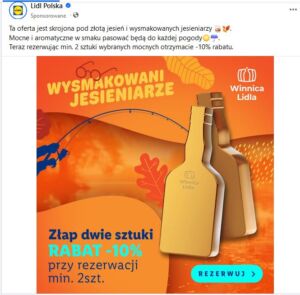
Sure; of course; definitely (as an affirmative response to a question); most commonly occurs after the Polish word ‘no’
Examples of usage:
[own translation]
– Are we playing football after school?
– No, jacha! /from a conversation among teenagers/
An abbreviation created from the English expression in before meaning “before; before you say that…; anticipating replies that…,” used in discussion forums and social media in order to prevent the posting of anticipated responses, advice, or votes in a particular thread.
Example of usage:
[own translation]
Could you help me? I turned on my laptop, and the situation looked exactly like in the video. inb4 I’ve already tried turning it on and off.
/https://www.facebook.com/groups/ithardware.pomoc/permalink/2854063058165316/
‘in my opinion’
Examples of usage:
[own translation]
1. imo an awesome move /https://twitter.com/niemozliwe_/status/1471794552063283205/
2. […] Christmas Eve is, IMO, the worst holiday […] /https://twitter.com/AmeliaBanaszak/status/1472257544412446724/
‘trade, monetize, get rid of something’. The word originates from the English language – trade, trading (in the Polish language: ‘handel, handlować, handlowanie’) and is popular among computer gamers. This verb also appears in the perfective aspect (strejdować). In specialized language, there is also the word tradować ‘formerly: to take possession of a debtor’s property according to the law for the benefit of the creditor’ (SJP PWN, translated). It is also found in the terminology of those involved in the Forex market, where trejdowanie/tradowanie refers to ‘buying and selling’ https://www.facebook.com/pfxc.org/posts/546917855338340/.
The word has been recorded since 2014 but is still used and reported by young people today.
Example usage:
/https://www.wykop.pl/wpis/45063983/kompletnie-nie-umiem-sie-trejdowac-na-linii-zwykle/
(Eng. total boss)
A person admired for daring actions, courage, and creativity. Someone who is exceptional or has done something extraordinary. The expression is synonymous with words like “kozak” (Eng. “badass”) or “gość” (Eng. “dude”) or someone who “rules”. The verb “rządzić” (Eng. “to rule”) in collocations such as someone or something “rządzi” (Eng. “rules”) means that someone is the best at something or is the winner (cf. English “rulez”; e.g., “Poznań rulez”, “5b rządzi”).
The graphical equivalent of a “total boss” is, according to some teenagers, the “smiling face with sunglasses” emoji:
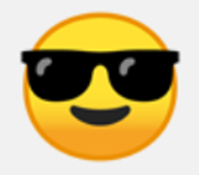
Source: https://emojio.top/google/
The expression “totalny szef” (Eng. “total boss”) has permeated colloquial language, especially in its online variant, as a hyperbole of extraordinary behavior, e.g., “Kamil Glik like a total boss” /https://naszemiasto.pl/kamil-glik-jak-totalny-szef-memy-o-meczu-polska-anglia/ar/c2-8446887/.
Examples of usage:
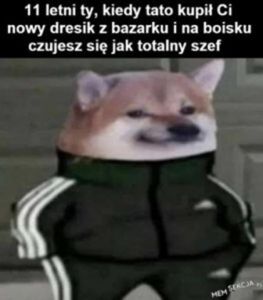
Examples of memes:
“Eleven-year-old you when your dad has bought you a shiny tracksuit from the market and you feel like a total boss on the playground”
[Eng. ‘the language of facts’]
‘approval, statement of fact, confirmation of truth]
[variant: choose ‘język faktów’]
The expression is used in conversation or in online comments to show approval of the speaker’s words.
Example of usage:
[own translation]
A popular saying, especially on TikTok, referencing the well-known phrase: “Ah, these women!” It serves as an ironic, mocking summary of a statement or behavior considered stereotypically ridiculous or foolish. Additionally, using the tag #łymynmoment ☕, clips (movie snippets, memes, comments) are shared, and such situations are mocked.
The term refers to a scene from the game Team Fortress 2, which became a popular meme – a dialogue between two men sipping coffee and laughing loudly after saying “women”.
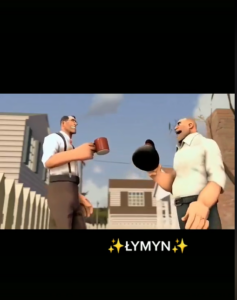
Source: https://www.tiktok.com/@mlody_matczaq77/video/7090606407317196038?is_from_webapp=v1&item_id=7090606407317196038
 English
 Polski